Banana Embroidery: A Designer’s Practical Review
As an embroidery designer who has spent years digitizing and testing thousands of motifs, I have learned that the simplest shapes often present the most significant challenges. When I first loaded the Banana Embroidery design into my software, my initial reaction was one of cautious optimism. It is a playful, recognizable motif that fits squarely into the popular Food category, but its success relies entirely on execution. This is not just a cute graphic; it is a test of how well a digital file translates into thread on real fabric. For small business owners, Etsy sellers, and hobbyists, understanding the nuances of this design is crucial before committing to a final product.
First Impressions and Visual Personality
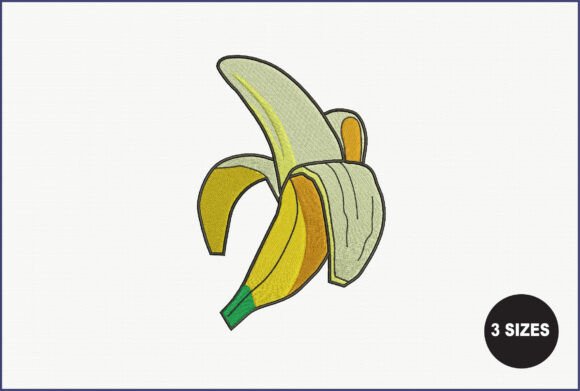
The immediate appeal of this machine embroidery design lies in its whimsical nature. Bananas evoke feelings of warmth, humor, and nostalgia. Visually, the curved shape offers a dynamic flow that can break up the rigid lines of text or geometric patterns in a larger composition. However, from a technical standpoint, the curvature is where many designs fail. If the digitizing is poor, the curve will look jagged or distorted after stitching. Upon closer inspection of the preview, the layout appears balanced, with a clear distinction between the peel and the fruit body. This separation is vital for creating depth without relying on excessive shading, which can bulk up the fabric.
The mood created by this design is lighthearted and approachable. It does not take itself too seriously, making it an excellent candidate for products aimed at children, casual wear, or kitchen decor. It lacks the stiffness of formal floral arrangements, offering instead a relaxed, organic vibe that resonates well with modern handmade aesthetics.
Real-World Application: The Tote Bag Test
To truly evaluate any embroidery file, you must imagine it in a real-life scenario. I recently considered using this banana motif for a custom canvas tote bag project. Canvas is a sturdy, woven fabric that generally handles embroidery well, but it requires careful attention to stitch density. For a tote bag design, the goal is durability and visual impact. The banana’s bright yellow tones pop beautifully against natural beige or deep navy canvas, providing high contrast that catches the eye from a distance.
In this context, the design serves as a standalone statement piece. It does not need accompanying text to be understood, which simplifies the production process. For an Etsy seller or craft business owner, this efficiency is valuable. Fewer color changes and simpler layouts mean faster production times and lower risk of thread breaks. When stitched on a tote, the banana adds a touch of personality that transforms a utilitarian item into a handmade product with character. Customers are drawn to items that feel unique and cheerful, and this motif delivers that emotional connection effectively.
Versatility Across Product Lines
Beyond tote bags, the versatility of this design is impressive. It translates well to sweatshirt embroidery, where the soft texture of fleece or cotton blend provides a forgiving background for the stitches. On a chest pocket or sleeve, the small scale of the banana acts as a subtle accent rather than an overwhelming graphic. For baby embroidery, such as on onesies or bibs, the design’s rounded edges are safe and appealing. Parents often seek out fun, non-traditional motifs for nursery items, and a food-themed design fits perfectly into a playful, modern nursery aesthetic.
Home decor is another strong category. Imagine this stitched onto linen tea towels or aprons. In a kitchen setting, the theme is literal yet stylish. It works particularly well for holiday embroidery projects, such as back-to-school gifts or summer-themed bundles. For commercial embroidery clients, such as local cafes or juice bars, this design could be adapted into branded merchandise, provided the licensing allows for commercial use. Always verify the specific terms before selling finished items.
Technical Considerations and Fabric Challenges
While the design is charming, it is not without its technical pitfalls. One must be cautious when stitching on stretchy fabrics like jersey knits. Without proper stabilization, the tension from the fill stitch areas can cause the fabric to pucker, distorting the banana’s shape. Using a cut-away stabilizer is recommended for garments that will be washed frequently. Similarly, on thin fabrics, the stitch density must be monitored. If the design is too dense, it will create a stiff patch that feels uncomfortable against the skin.
Curved surfaces, such as caps or hats, present another challenge. The banana’s arc must align with the curve of the cap panel to avoid looking twisted. This requires precise hooping and potentially adjusting the rotation angle in your embroidery software. For embroidered patch creation, the design works well because the backing provides stability, but ensure that the edges are cleanly finished with a satin stitch border to prevent fraying.
Dark fabrics require special attention to thread colors. A standard yellow thread may not show up vividly on black or dark blue material. In these cases, consider adding a white underlay or choosing a brighter, neon-yellow thread to maintain visibility. Testing on scrap fabric is non-negotiable here. What looks good on screen may lack contrast in real life.
Enhancing Product Value and Brand Consistency
From a business perspective, the quality of your embroidery directly impacts customer trust. A clean, well-stitched banana motif signals professionalism. It shows that you care about the details, from thread tension to color selection. This attention to detail enhances the perceived value of your finished product. For brands focusing on fun, quirky, or eco-friendly vibes, this design reinforces brand consistency. It becomes a recognizable asset in your portfolio, helping buyers identify your style.
When creating printable mockups or digital previews for your online shop, ensure the images accurately represent the texture of the stitches. Buyers want to see the dimensionality of the embroidery. Highlighting the tactile quality of the design can increase buyer engagement and conversion rates. It moves the product from a simple image to a tangible, desirable object.
Practical Designer Notes for Best Results
Before launching this design into your production line, follow these practical steps:
- Test on Scrap Fabric: Always run a test stitch-out on the same type of fabric you intend to use for the final product. Check for puckering, thread breaks, and color accuracy.
- Check Stitch Density: Review the digitizing settings. If the fill areas are too dense, reduce the density slightly to keep the fabric soft and flexible.
- Contrast is Key: Ensure your thread colors contrast sufficiently with the fabric. Use a color wheel to find complementary shades if necessary.
- Verify Hoop Size: Confirm that the design fits comfortably within your hoop size, leaving enough margin for stable hooping.
- Inspect Small Details: Zoom in on the digital file to check for any tiny, unnecessary stitches that might cause jams or clutter the design.
- Licensing Confirmation: Clearly understand the license terms. Can you sell finished physical products? Can you share the digital file? Never assume; always read the documentation provided with the digital embroidery file.
In conclusion, Banana Embroidery is a versatile and engaging design that holds up well under professional scrutiny. It offers a blend of charm and simplicity that appeals to a wide audience, from parents to fashion-forward adults. By paying attention to fabric choice, stabilization, and stitch quality, you can transform this digital asset into a high-quality, profitable addition to your product lineup. Whether for a personalized gift or a small shop product, this design proves that even the simplest motifs can make a significant impact when executed with care and expertise.