Baby Footprints Embroidery: A Designer’s Review
As an embroidery designer who spends countless hours digitizing and testing files, I have developed a keen eye for what makes a machine embroidery design truly viable for commercial use. It is not just about how the graphic looks on a screen; it is about how it behaves under the needle, how it wears after washing, and whether it adds genuine value to a handmade product. Recently, I evaluated the Baby Footprints Machine Embroidery collection available on Creative Fabrica to determine if it meets the rigorous standards required for my client projects and personal Etsy shop inventory.
The initial impression of this design set is one of delicate simplicity. In the world of Embroidery, especially within the Boys category where designs can sometimes lean too heavily into bold, aggressive motifs, there is a significant market demand for soft, sentimental imagery. These tiny footprints offer that exact emotional resonance. They are minimalist yet evocative, capturing the fleeting nature of infancy in a way that appeals to parents, grandparents, and gift-givers alike. The visual mood is gentle and nostalgic, making it an ideal candidate for nursery decor and keepsake items.
Evaluating Design Versatility and Scale
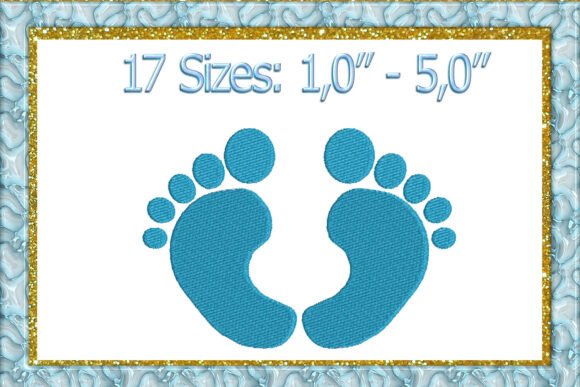
One of the most critical aspects I look for in a digital embroidery file is versatility. This specific product stands out because it comes in 17 different sizes. The smallest size is listed as 1.02” x 0.69” (26.0 mm x 17.6 mm). For a professional embroiderer, this range is invaluable. It means I am not locked into a single application. I can use the tiniest iteration for subtle details on a baby onesie or a cuff, while the larger sizes can serve as focal points on tote bags or pillow covers.
When considering custom apparel, scale is everything. A design that is too large can overwhelm a small garment, while one that is too small may lack impact on a larger canvas like a blanket. Having 17 size options allows me to tailor the embroidery file to the specific hoop size and garment type without needing to manually resize and risk distorting the stitch density. This flexibility is crucial for maintaining high-quality output across different products.
Performance on Real-World Fabrics
Theoretical appeal means little if the design does not stitch out well. I mentally simulated using these footprints on various textiles commonly found in my workshop. For sweatshirt embroidery, the design’s simplicity suggests it would handle the texture of fleece or cotton blends well, provided the correct stabilizer is used. Because the design is relatively small and likely consists of fine lines, ensuring proper stabilization is key to preventing puckering, especially on stretchy fabrics.
For tote bag design applications, the footprints could be repeated in a pattern or used as a singular accent near the handle. On durable canvas, the stitches should hold up well, adding a charming, personalized touch that elevates a standard bag into a personalized gift. However, when working with textured fabric or dark fabric, I always advise checking thread color contrast. Light threads on dark backgrounds require precise tension settings to ensure the underlying fabric does not show through the stitches, which can detract from the clean look of the footprints.
Curved surfaces, such as caps, present a unique challenge. While these footprints are small enough to fit on a cap front, the curvature can distort small details. If you plan to create an embroidered patch instead, you have more control over the stabilizer and hooping process, which might yield a cleaner result for such intricate, small-scale designs. Always test on scrap fabric that matches your final material to gauge how the stitch density interacts with the weave.
Commercial Viability and Product Value
From a business perspective, incorporating Baby Footprints Machine Embroidery into your product line can significantly enhance buyer trust and perceived value. Customers often associate hand-embroidered details with higher quality and care. Whether you are selling commercial embroidery products at craft fairs or through online platforms, these designs offer a quick yet effective way to customize items. They are particularly effective for seasonal handmade gifts, such as baby shower presents or holiday ornaments.
The aesthetic consistency of these footprints allows for strong brand presentation. If your shop specializes in baby items, using a cohesive set of designs helps create a recognizable style. Furthermore, for those who create printable mockup listings, the clean lines of these footprints photograph beautifully. Good product photography is essential for online sales, and simple, elegant designs tend to stand out in crowded marketplaces without looking cluttered.
Technical Considerations for Best Results
Before committing to a full production run, there are several practical steps every embroiderer should take. First, always review the specific file details on the Creative Fabrica embroidery product page. While we know the sizes range down to 1.02” x 0.69”, it is vital to confirm the available file formats to ensure compatibility with your specific machine. Different machines read different formats, and having the right file type prevents unnecessary conversion issues.
Second, pay close attention to thread colors. While the design is simple, the choice of thread can dramatically change its character. Soft pastels work well for traditional baby items, while contrasting brights can make the footprints pop on neutral backgrounds. If the design utilizes satin stitch or fill stitch elements, ensure your thread weight matches the digitizing. Using a heavier thread than intended can cause bulkiness, while a thinner thread might not cover the fabric adequately.
Stabilizer selection is another non-negotiable factor. For knit fabrics like those used in baby clothes, a cut-away stabilizer is often recommended to provide long-term support. For woven fabrics like kitchen towels or aprons, a tear-away might suffice. Always inspect small details after stitching a test sample. Look for any loose threads or areas where the fabric may have pulled. This inspection phase is crucial for maintaining the high standards expected of design assets used in commercial settings.
Final Thoughts on Usability
In conclusion, the Baby Footprints Machine Embroidery set offers a practical and emotionally appealing option for embroiderers looking to expand their library of baby-themed designs. Its strength lies in its simplicity and the extensive range of sizes provided, which allows for great flexibility across various projects, from tiny appliqué design accents to standalone features on larger items.
For Etsy sellers and small business owners, this design represents a low-risk, high-reward addition to your catalog. It fits naturally into the Boys category but is versatile enough for any gender-neutral or girl-specific project depending on thread choice. By following best practices regarding stabilizers, thread tension, and fabric testing, you can ensure that each finished product meets professional standards. As with any design assets purchase, always verify the licensing terms on the product page to ensure compliance for commercial use, but rest assured that this design has the potential to become a staple in your creative toolkit.