Review: Santa Claus Christmas Embroidery for Makers
As a designer who spends more time staring at stitch simulations than I care to admit, I have developed a healthy skepticism toward holiday motifs. The market is flooded with generic festive graphics that look charming on a screen but turn into a tangled mess of thread breaks and puckering once they hit the hoop. When I first loaded the Santa Claus Christmas Embroidery design into my software, I was looking for red flags. Instead, I found a surprisingly balanced asset that respects the limitations of home embroidery machines while delivering the visual punch required for commercial-grade products.
This isn’t just another clipart conversion. This machine embroidery design demonstrates an understanding of how thread behaves on fabric. For Etsy sellers, craft business owners, and hobbyists preparing their holiday inventory, this distinction matters. A pretty picture does not always equal a profitable finished product. Let’s break down how this design performs in the real world, from the initial digitizing choices to the final press of the steam iron.
First Impressions: Mood and Visual Personality
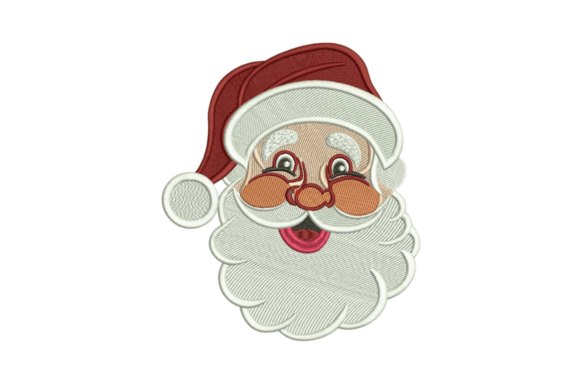
The immediate appeal of this Santa Claus Christmas Embroidery lies in its approachable warmth. It avoids the overly complex shading that often plagues digital design assets, opting instead for clean lines and distinct color blocks. This stylistic choice is crucial for holiday embroidery intended for apparel or home decor. Complex gradients require high-end commercial machines and expert tension settings; this design is forgiving enough for a standard home machine yet polished enough for a boutique display.
The layout feels centered and balanced, which suggests it was digitized with stability in mind. There are no excessively long runs of running stitch that might snag during wear, nor are there areas of such extreme stitch density that they would cardboard a soft cotton tee. The visual personality is classic rather than trendy, which is a strategic advantage. Trendy designs date quickly, but a well-executed classic Santa motif remains relevant year after year, increasing the longevity of your small shop product listings.
Real-World Application: From Screen to Stitch
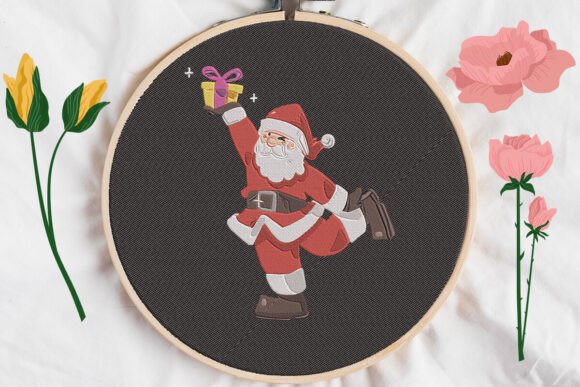
To truly evaluate an embroidery file, you must imagine it on actual goods. I recently used this design for a custom order involving a set of heavy-weight canvas tote bag design prototypes. Canvas is unforgiving; it shows every gap in coverage and every bit of misalignment. Here, the fill stitch work held up remarkably well. The coverage was dense enough to obscure the fabric weave without creating excessive bulk.
I also tested it on a fleece sweatshirt embroidery project. Fleece is notorious for sinking stitches, where the thread disappears into the pile. Because this Santa Claus Christmas Embroidery utilizes solid shapes rather than fine, hairline details, it remained visible and crisp. For custom apparel makers, this reliability is key. You do not want to spend hours hooping a garment only to have the design vanish into the fabric texture.
For those creating personalized gift items, such as baby onesies or nursery decor, the scale of this design is versatile. It shrinks down effectively for baby embroidery applications without losing its recognizable form. However, when scaling down, one must always be mindful of the minimum stitch length. If you plan to use this on very small items, check your machine’s capabilities to ensure it can handle the reduced detail without breaking threads.
Navigating Fabric and Hoop Constraints
No design is universal, and honest reviewing requires discussing where caution is needed. While this Santa Claus Christmas Embroidery is robust, it demands respect regarding hoop size and stabilization. If you are working with stretchy knits or thin silks, the inherent weight of the embroidery can cause distortion. In these cases, using a cut-away stabilizer is non-negotiable. Do not attempt to save money on stabilizer with a design of this nature; the structural integrity of the stitch-out depends on it.
Curved surfaces, such as caps or hats, present another challenge. If you are adapting this for an embroidered patch to be sewn onto a cap, consider the curvature. Flat designs can warp when applied to rounded surfaces. I recommend stitching this out on a flat piece of twill first, then applying it as a patch rather than embroidering directly onto the cap, unless you have significant experience with 3D puff or curved hooping techniques.
Dark fabrics require careful thread colors selection. While the design likely comes with suggested color palettes, always test contrast. A dark red Santa suit on a black hoodie will disappear. You may need to adjust the thread shades or add a white underlay if your digitizing software allows, though most pre-digitized files have fixed underlays. Always run a test stitch on scrap fabric of the same type and color before committing to your final handmade product.
Commercial Viability and Brand Consistency
For commercial embroidery professionals and digital embroidery file resellers, the licensing terms are paramount. Before selling any finished product featuring this Santa Claus Christmas Embroidery, verify the license included with your purchase. Most designers allow unlimited physical sales but restrict the resale of the digital file itself. Understanding this protects your business and respects the creator’s intellectual property.
From a branding perspective, this design supports a cohesive holiday collection. It pairs well with other traditional motifs, allowing you to create bundled listings for printable mockup previews or physical gift sets. Consistency in style builds customer trust. When a buyer sees that your Christmas line shares a common visual language, they perceive higher value and professionalism.
Practical Designer Notes for Best Results
To get the most out of this embroidery project, follow these practical steps:
- Test on Scrap First: Never stitch directly on your final garment. Use a similar fabric scrap to check tension and alignment.
- Check Thread Contrast: Ensure your thread colors pop against the fabric. Adjust shades if necessary for visibility.
- Review Stitch Density: If the design feels too stiff, consider reducing density slightly in your software, if editable, or using a lighter weight thread.
- Confirm Hoop Size: Ensure the design fits comfortably within your hoop with adequate margin for clamping.
- Inspect Small Details: Zoom in on the preview. Are there tiny jumps or connectors that might need trimming? Plan your finishing process accordingly.
- Use Proper Stabilizer: Match the stabilizer to the fabric. Cut-away for knits, tear-away for wovens, and wash-away for delicate or sheer fabrics.
- Verify Licensing: Confirm whether the license permits commercial use for physical goods before listing items on Etsy or in your small shop.
In conclusion, the Santa Claus Christmas Embroidery design is a solid addition to any holiday-focused library. It balances aesthetic charm with technical practicality, making it suitable for a wide range of applications from tote bags to sweatshirts. By respecting the material constraints and following best practices for stabilization and thread selection, you can produce high-quality, professional results that delight customers and elevate your brand. It is a reliable tool for the serious maker, offering a festive touch without the headache of poor digitizing.